RSS Feed

27 August 2006

Back on the block

I'M BACK from a month that was both busy and bizarre. In the aftermath of the Mumbai blasts, several ISPs (including mine) in India blocked BlogSpot.com, TypePad.com, and Geocities.com. This left me (and countless other bloggers) helplessly silent amidst the media hysteria following the terrorist surprises of the past six weeks. This afternoon, I was going to sit down and write about how July was not too jolly and how August augured badly. Then I realized that the events in India, the Middle East, and the United Kingdom have already reached some semblance of an ending. For the time being, I can write about hopeful things.

I am so glad to return to the blogosphere that I spent the whole afternoon today tweaking the site, reclassifying the posts into various categories, and organizing my list of links to other sites worth reading. Keep watching this space. More precisely, watch the space on the left.

12 July 2006

Blasts in Mumbai!

IN VIEW of this early evening's train bombings in Mumbai, please know that I am safe at home. The bombings occurred around the suburb that I live and work in, so the situation was pretty scary.

The local and national mobile phone network is down, though, so I am unable to determine whether my staff and colleagues have been able to reach home safely. The bombings began when people were rushing to get home.

Your thoughts and prayers for the people of India will be very helpful.

10 July 2006

Viva Italia!

THE ROMANS won over the Celtic Gauls in the global theater that was 2006 FIFA World Cup. Congratulations to the Italians and the fans of Italy. In your honor, I present la divina signora Bette Midler with “Mambo Italiano


E molto dificile resistere Italia! Con pizza! Maria Grazia Cucinotta! Oooh la la! Ooops, that was French. Sorry, Zidane.

09 July 2006

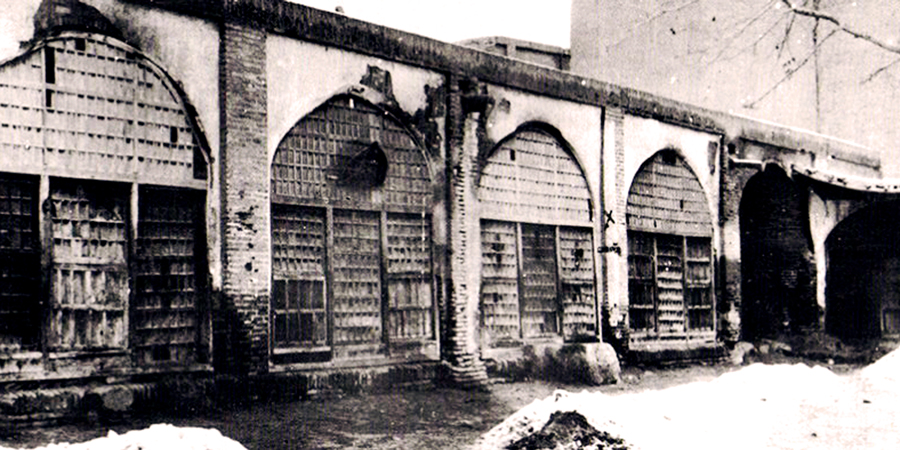
Martyrdom of the Báb

The barracks square where the Báb was executed. Source: BCI.org

The barracks wall where the Báb was executed on 9 July 1850

AT THE Bahá'í Centre in Mumbai today, I joined over a hundred other members of the Bahá'í Faith in remembering the arrest, torture, imprisonment, and eventual execution of the Báb (born 1819) in Tabriz, Persia, on July 9, 1850. The Báb, whose name meant “the gate” in Arabic, was a Divine Messenger Whose brief mission on earth prepared humanity for the coming of Bahá’u’lláh, the Prophet-Founder of the Bahá'í Faith.

Prior to a special prayer read by Mrs. Zena Sorabjee at noon, we viewed a moving fifteen-minute film that narrated His martyrdom. Once again, I was reminded of the immense potency and meaning of this day, which Shoghi Effendi called a century later as “the most dramatic, the most tragic event” in the history of the Bahá'í Faith.

27 June 2006

The world's rudest cities?

How rude! Image source: FreeRangeStock.comASIA'S LANDS have cultivated strong traditions of hospitality throughout history, from serving tea to greeting namaskar or sawasdee with the courteous bow. But a global courtesy test by Reader's Digest sees a flip side to this.

The magazine administered three politeness tests in the main cities of 35 countries where it is published: dropping papers in a street to check helpfulness, counting how often shopkeepers said “thank you”, and testing how often someone held a door open for others.

The results were released last week, and they are surprising. New York City emerged as the most polite city and Mumbai as the least!

Here are other findings:

  • Asia is the least gracious continent on earth: eight of nine Asian countries rank lowest. Manila's manners rated best in this region.

  • English manners are as good as French: London and Paris shared the same score. Berlin, though, is better bred than both.

  • Those younger than 40 are the most courteous; those over 60 are the least.

  • The worldwide level of politeness stands at 55 per cent.

Here in Mumbai, citizens have been quick to dispute the results. Over the weekend, newspapers took the city's politeness quotient by interviewing celebrities and common folk. The universal response: you have to live here to understand its graciousness. Scriptwriter Salim Khan offered: “The people who did the survey should have worked harder to know Mumbai better.”

Well, true: Mumbai grows on you, although slowly. And I am glad that my fellow Filipinos were being their usual mannerful selves during the candid tests. But the one question I have about the whole survey regards the methodology designed for it. How appropriate are the parameters designed by Western minds for non-Western cities?

I have to wonder how valuable a survey about global courtesy is when differences in cultural dimensions are not taken into accountMy experiences in Bangkok, Phnom Penh, and Mumbai have shown me that common courtesies are all relative. A Thai would show gratitude with the bowing, palms-closed gesture called wai. In India, most languages have no specific word for “please”, so politeness is used in the way that the request is worded. Also, the act of giving is considered to be such a reward that it becomes bizarre to thank the giver! The Indian, however, may express gratitude with a phrase like “May you live a hundred years”. And in the conservative Buddhist, Muslim, and Catholic societies of Southeast Asia, a well-bred lady is not expected to pick up a newspaper dropped by a man!

So I have to wonder how valuable a survey about global courtesy is when differences in cultural dimensions are not taken into account. Perhaps the good news is this: the Reader’s Digest survey reminds us of the reality of human diversity and shows us more reasons to celebrate it.

For all its worth, here is the final tally:

The most courteous cities. Image source: ReadersDigest.ca

The least courteous cities. Image source: ReadersDigest.ca

Image source: ReadersDigest.ca

18 June 2006

Turning 41

Aging publicly. Image source: Isra Ramirez

How not to hide from birthdays.
Image source: Isra Ramirez's e-mail to the world of humanity

THE FIRST messages on my mobile phone last Friday came from my ten siblings around the world. This is how the family remains connected, wherever we are. We commemorate the events of our lives with timely messages across the seas in phone calls, text messages, or e-mails to one another.

11 June 2006

FIFA fo fum

2006 FIFA World Cup. Source: FIFAWorldCup.Yahoo.comAND SO the world's most euphoric sports event has kicked off, and millions around the world are once again unified with the common language of cheering wildly. Here in Mumbai, retailers are latching on the 2006 FIFA World Cup fever with colorful branding and themed merchandise. At HyperCity, the cheering takes on the form of a splendid display created by visual merchandiser Darshita Thaker: six life-sized cutouts of football players stand at the store entrance dressed in actual gear.

I told Anand Ray, a colleague at HyperCity, that I was rooting for the underdog Croatia. I have no national team to cheer on. Like India, the Philippines is not playing in the World Cup; however, unlike Indians, Filipinos do not turn ecstatic over the game.

Football is simply not popular in the Philippines, despite the national football team being the oldest in Asia. The national sport is basketball: give the Filipinos one match, and you get the most boisterous moments of your life. Football is played mostly in high schools and universities as part of physical education courses. The game is also popular in the central islands of the Philippines, where Spanish influence remains strong.

Give the Filipinos one basketball match,
and you get
the most boisterous
moments
of your life
So what can I do when the whole world is gaga and I have no national team to go gaga over? For one, I can vouch for hometown Germany; my sister lives there, and everyone else is cheering for them. Or I can vouch for Spain, old motherland of the Philippines; they deserve to be in winning form like the rest of the Latin world. Or I can just wear the flag of Croatia. Wait, are they actually playing?

Oh well, I guess I can always simply cheer on Darshita's life-sized cutouts in front of HyperCity. I think one of them looks like a Filipino version of Ronaldinho . . .

04 June 2006

Equal signs

Another blow against women's rights? Image source: Jason de Villa

Another blow against women’s rights?
Image source: Jason de Villa

JASON DE VILLA WRITES, in A Hundred Words A Day, about the mandatory signage shown above in one of Manila’s Mass Railway Transit (MRT) stations:

What were the operators of the MRT thinking? Lumping women, who have fought for decades against the image of being the “weaker sex,” with the elderly, children, and the disabled!

As a willing crusader for female rights—read my essay on female fortitude—I am with Jason on this. What appalls me are the very low taste levels and offensive judgment evident in making the signage. The physically challenged, both elderly and handicapped, correctly require such special treatment in a massive public facility like the MRT. However, by including the whole female gender in the category of preferential treatment, the message thus reads: “Women are physically challenged; they cannot be in the same place as men.”

Our generation has seen the most promising advances in ensuring the equality of men and women in the past 163 years. Perhaps we need a train station signage such as this to remind us that trains of thought are still arriving from a different direction . . . and that so much is yet to be done to redirect railways towards building a global society.

Dial “m” for migraine

MY ONE lingering wish for humanity: that it never suffers from migraine. I finally recovered from a two-day attack, and, as always, the suffering is insufferable. Rhea Aquino, a former colleague in Israel, had a name for it: Miggi. When I would call in sick, she would ask, “Kuya Paul, is Miggi on home visit again?” My last attack was seven weeks ago; perhaps Miggi thought it was time pay a “home visit”.

I have had migraine episodes since my late twenties, and I have never really managed it perfectly. Once the symptoms show up, paracetamol and ibuprofen come in handy, but oftentimes the effects kick in too late. I used to swig a steaming mug of black coffee in hopes that the caffeine would stimulate those spasmodic blood vessels that turned my head into a throbbing boom box; I stopped the coffee-swigging habit in fear of becoming coffee-addictive. My sister Myriam used to massage the tips of my fingers to stimulate blood vessels (and they are often relieving), but to become a self-masseur is the last thing on your mind when you are under attack and you live alone.

The only solution then is to crawl into a dark, quiet room and sleep it off. This was challenging for me in the past two days, as apartment walls in Mumbai are never really sound-proof (read: Mumbai is noisy, period). Perhaps I should return to the steaming mug of black coffee next time. That, or sing along to my head-turned-boom box.

Monsoon so soon

View of the street where I live

The day after: all wet and wild on the street where I live.
Photo: Paul Ancheta

THE FIRST RAINS of the year arrived heavily in Mumbai last Wednesday, and they threw Mumbai out of gear. Monsoon season normally starts early June, so the heavy downpour took most Mumbaikars—including the regional weather bureau, which forecast “cloudy skies” that day—by big surprise.

“If this is the condition after the first rains, what will it be like in the coming months?”
—MP Priya Dutt
Worse, the rains cast heavy doubt on the monsoon preparedness claims by the city officials, in light of the disastrous deluge on 26 July 2005 (locally known as 26/7). Heavy water logging caused traffic jams and delays and cancellations in railway and airline schedules. Mumbai congresswoman Priya Dutt fumed, “If this is the condition after the first rains, what will it be like in the coming months?”

Hopefully it will not be a city on water standstill, as I saw last Wednesday evening. We were driving back to HyperCity from a suburban agency inspection when the Really Big Rains began. The sidewalks quickly disappeared under cascading water, and the three-lane street became one-lane. By the time I got to HyperCity two hours later, the torrent had stopped, but the showers continued. I learned later that those two hours of downpour were enough to cause the water logging and to grind Mumbai to a halt.

It is time I get three big umbrellas. And a pair of Wellingtons.

21 May 2006

Being late

AT THE BANGALORE domestic terminal this afternoon, the PA announced a 40-minute delay of the Kingfisher Airlines flight to Mumbai due to, uh, a delay of their flight from Mumbai. My thoughts went quickly to those passengers who had to suffer the inconvenience in an airport with uncomfortable seating, poor air-conditioning, expensive coffee, and no book store in sight.
But then again maybe those passengers, particularly the Indians, are used to delays from Kingfisher. Mark Bell, British visual merchandising specialist with whom I was traveling around India this passing week, told me the other day that Kingfisher is known for flight delays. I found this quite hard to imagine. My Kingfisher flight from Mumbai to New Delhi departed on time last Tuesday; more importantly, the local airline is positioned heavily as an “experience like you've never had before”.
Vijay Mallya and Kingfisher. Photo by BBC(Well, perhaps. Vijay Mallya, the savvy, if not flamboyant, founder of Kingfisher Airlines, seems to flaunt this by using sultry female flight attendants in flaming red body-hugging mini-skirts. With flaming red shoes to match, naturally.)
Habitual tardiness of vendors and contractors has so far been my one big test while working in India. In visual merchandising, so dependent on materials for display, late deliveries of custom-built materials jettison all subsequent work. Unfortunately, this obvious fact does not seem to be either accepted or understood, at least amongst Mumbai contractors. There is always an unapologetic reason for being late (getting caught in traffic is in the top three). Oftentimes, I end up adjusting schedules to accommodate late submissions.
Why worry over things you can’t control?At the end of the day, to preserve my sanity, I ask myself, “Why worry over things you can’t control?” Given India’s massive population, demand for goods becomes so heavy that sub-standard work is acceptable. Extremes in weather create physically taxing environments for efficient work. And Mumbai’s road infrastructure is impossible to work against.
I am gradually learning. At the end of the day, patience and perseverance are things I can control. And they make me a happier man, with or without those flaming red skirts flying in the skies.

The Bahá’í Temple in India

The Bahá'í House of Worship in India. Source: Bahá'í BibliothequeALL THESE YEARS as a member of the Bahá'í Faith, I had seen the Bahá’í House of Worship in India only on paper, particularly during my years handling audio-visual materials at the Bahá’í World Centre in Israel. It is one of eight temples around the world, built as gathering places of prayer and meditation for people of all faiths.

Inspired by the lotus flower, the building has 27 free-standing marble "petals" clustered to form nine sides of a glass-contained prayer hall. At night, these "petals" float in a sea of spectacular lighting effect. This illuminated view of the Lotus Temple, as it has become known around the world, is what flashes in my mind whenever I think of it. It is an extraordinary vision.

Last Friday evening, I was not sure how I would handle that lingering view as the car I was riding in drove towards the temple site in New Delhi. It was my first-ever visit, and snaking through dusk-time traffic with the thought of seeing the beloved temple for the very first time left me restless. Suddenly the car broke away from the jam, sped through, turned to a corner, and drove uphill.

And then, just as abruptly, there it was.

The Bahá'í House of Worship in India. Source: Bahá'í BibliothequeDo you remember the first time you saw a movie in a cinema as a child? Remember the larger-than-life figures on widescreen? The soundtrack that wrapped you in delightsome music? Similar sensations rushed through me as I saw the temple emerging into full view. This time, though, the widescreen was much larger, the figures blurred, and the music surreal. I have visited another temple before—at Langenhain, Germany—but the potency of my visit to the Delhi temple is particularly enormous to me, being an Asian living next to the cradle of my Faith.

The potency of this visit is particularly enormous to me, being an Asian living next to the cradle of my FaithI first saw the top of those “petals”, and as the view became full, I knew that my stay in India now had a deeper meaning. The next sixty minutes came and went as I wrapped myself in prayer inside the temple. When it was time to leave, I looked back at the queues of visitors, foreigner and Indian, all entering the temple in collective silence. The serenity and splendor of its gardens and grounds prove once again the beauty and binding power of religion.

14 May 2006

India's first hypermarket opens

HyperCity. Source: HyperCityIndia.comIF A SUCCESSFUL store opening is measured by the mere number of visitors, then the opening of HyperCity on the week of 1 May 2006 is a mega-stratospheric triumph. Thousands of Mumbaikars trekked daily into India's first international hypermarket on its first week, culminating in a mind-boggling (and body-squishing) weekend of massive humanity. It was spectacular! Never have I seen such massiveness of in-store traffic at a given place and time, not even in Dubai and Southeast Asia, where shoppers never seem to cease. For a non-Indian like myself, this is Indian retailing staring right in your face, throbbing and ready to roar.
Never have I seen such massiveness of in-store traffic at a given place and time!Eighteen months of hard, dedicated work by my colleagues at HyperCity Retail—a lean, mean, and fun team—gave these crowds sights and flavors and smells and textures that they have never seen in India before, all wrapped in value for money. T-shirt gift packs, plasma TVs, Raleigh bikes, and Waitrose gherkins are amongst those displayed on Indian shelves for the first time at a stupendously affordable price. And the shoppers lapped it all up. The cacophony of cash registers at the tills matched the happy squeals of children dribbling basketballs and the eager cellphone calls of young adults egging friends to visit this gigantic facility.

During the first four days, my team and I spent full time and energy churning out signs to communicate price changes and mandatory store information on real time and to replace those that were quickly mangled by the customer traffic. The demand for signs was ready to overwhelm the supply. On Tuesday and Thursday, the color inkjet printer bogged down, and the vendor serviceman was always unable to reach the store in time. On both occassions, I was ready to melt and vanish into someone else's wallet (or handbag, where it is cooler). The team had to generate the signs from the laser printer elsewhere (at the central office); I was often the most ecstatic person in the store when the color printer came back to life.

This is Indian retailing staring right in your face, throbbing and ready to roarEvery evening and early morning, the team and I would rearrange the displays. The "Spa Display", showcasing health and beauty products around a state-of-the-art bath tub, was always the most dramatically reconfigured by the customers. In place of bottles of massage oils on bamboo mats, we would find soda cans. Bath towels folded daintily became heaps of linen. One day a friend removed a watermelon INSIDE the tub. I kidded that perhaps someone wanted to see if a melon was watery enough for a bath.

On Sunday morning, just before the onslaught of the weekend crowd, I was viewing the ground floor from the mezzanine and realized the bittersweet experience of this week. Never mind if signs and visual displays continue to go up and down and up and down in the hands of a racing, raging crowd. Dreams have come true in HyperCity, and they are sensational.

Related Site: Branding in India

Breezes, rebridged

COCOY AQUINO REMINISCED about Breezes and Bridges, the musical event that we co-produced in Israel late in 2004. In his letter last Thursday, he wrote:

It really brings back the sweet memories of all the hard work and cooperation of the friends in preparation for this grand presentation. Thank you for creating and updating this site. We hope to join force again in the future for another inspiring presentation.

22 April 2006

The curtains open

HALF OF my adult life has been spent behind store windows as an itinerant visual merchandiser, creating settings around a pair of shoes or recreating stories about an item of jewelry.

11 December 2005

Blogger, finally

WHEN MY former colleague John Hicks called me “blogger” in 2001, I thought he was cursing me. The term sounded like a vulgar, bragging liar—things I am not, the last time I checked anyway—and it infuriated me. It took me four years to realize that the gracious, artsy John Hicks was being gracious and artsy with me. Finally, I am a blogger. Listen, world. Here I am.

Now go forth and multiply.